













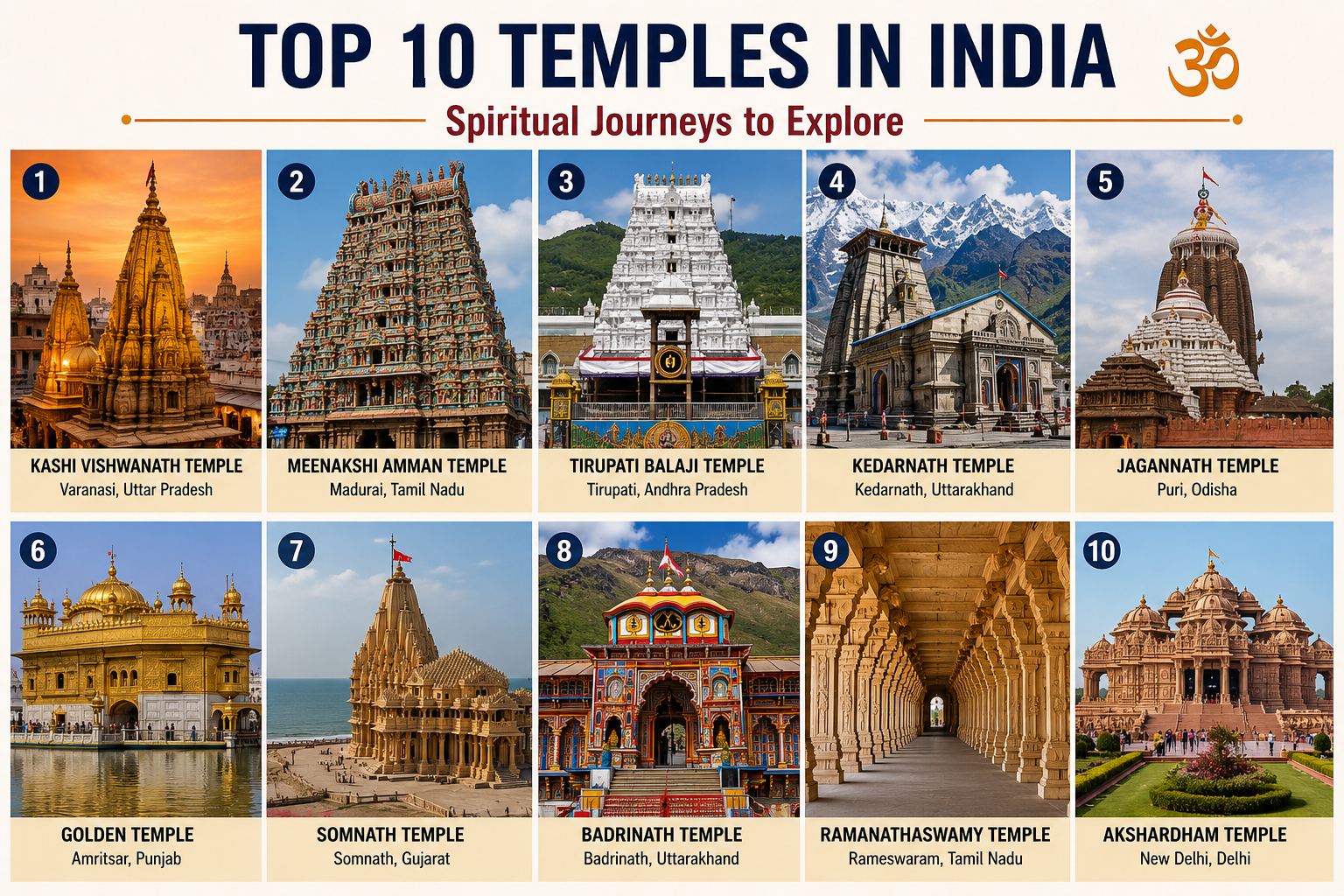
Explore India’s Most Sacred and Architecturally Stunning Temples
Introduction
India is a land of spirituality, culture, and ancient traditions. Home to thousands of temples, the country attracts millions of pilgrims, devotees, history enthusiasts, and travelers every year. These temples are not only places of worship but also remarkable examples of architecture, craftsmanship, and cultural heritage.
From the snow-covered Himalayan shrines to magnificent South Indian temple complexes, each temple offers a unique spiritual and cultural experience. Whether you are seeking inner peace, religious devotion, architectural beauty, or historical knowledge, India’s temples provide unforgettable journeys that connect visitors with centuries of tradition.
In this guide, we explore some of the most famous temples in India that deserve a place on your travel list in 2026.
“India’s temples are more than monuments—they are living symbols of faith, culture, history, and devotion.”
1. Kashi Vishwanath Temple, Varanasi
Kashi Vishwanath Temple is one of the most sacred Hindu temples dedicated to Lord Shiva. Located on the banks of the holy River Ganga in Varanasi, this temple holds immense spiritual significance for devotees.
Many Hindus believe that visiting Kashi Vishwanath and offering prayers can help attain spiritual liberation. The recently developed temple corridor has enhanced accessibility while preserving the temple’s historical importance.
Highlights
- Sacred Ganga Aarti
- Spiritual significance of Varanasi
- Beautiful Kashi Vishwanath Corridor
- One of the twelve Jyotirlingas
2. Meenakshi Amman Temple, Madurai
Meenakshi Amman Temple is one of South India’s most iconic landmarks. Dedicated to Goddess Meenakshi and Lord Sundareswarar, the temple is renowned for its colorful gopurams (towers), intricate sculptures, and impressive Dravidian architecture.
The temple complex attracts visitors from around the world due to its artistic beauty and vibrant festivals.
Highlights
- Thousand Pillar Hall
- Colorful temple towers
- Intricate sculptures
- Grand cultural festivals
3. Tirupati Balaji Temple, Andhra Pradesh
Dedicated to Lord Venkateswara, Tirupati Balaji Temple is among the most visited religious sites in the world. Located on the Tirumala Hills, it attracts millions of devotees every year.
The temple is famous for its spiritual atmosphere, organized management, and the beloved Tirupati Laddu prasadam.
Highlights
- Hilltop temple experience
- Famous Tirupati Laddu
- Spiritual atmosphere
- One of the world’s busiest pilgrimage sites
4. Kedarnath Temple, Uttarakhand
Situated amidst the majestic Himalayas, Kedarnath Temple is one of the twelve Jyotirlingas of Lord Shiva and an important part of the Char Dham Yatra.
Accessible through a scenic trek, the temple offers a deeply spiritual experience surrounded by breathtaking mountain landscapes.
Highlights
- Snow-covered Himalayan scenery
- Sacred pilgrimage route
- Spiritual atmosphere
- Historical significance
5. Jagannath Temple, Puri
Jagannath Temple is one of India’s most famous pilgrimage destinations. Dedicated to Lord Jagannath, a form of Lord Vishnu, the temple is known worldwide for its annual Rath Yatra festival.
Its traditions, rituals, and sacred Mahaprasad attract devotees throughout the year.
Highlights
- World-famous Rath Yatra
- Sacred Mahaprasad
- Ancient architecture
- Deep religious significance
6. Golden Temple, Amritsar
The Golden Temple, also known as Sri Harmandir Sahib, is the holiest shrine in Sikhism. Surrounded by a sacred water tank and covered in gold, the temple welcomes visitors from all faiths.
Its peaceful atmosphere and community kitchen (Langar) symbolize equality and service.
Highlights
- Stunning golden architecture
- Spiritual serenity
- Community Langar
- Open to people of all backgrounds
7. Somnath Temple, Gujarat
Somnath Temple is one of the most revered Jyotirlinga temples dedicated to Lord Shiva. Located along the Arabian Sea coast, the temple combines spiritual significance with scenic beauty.
The temple has been rebuilt multiple times throughout history and remains a symbol of resilience and faith.
Highlights
- Seaside temple views
- Historical importance
- Evening light and sound show
- Sacred Jyotirlinga shrine
8. Badrinath Temple, Uttarakhand
Badrinath Temple is dedicated to Lord Vishnu and forms an important part of the Char Dham pilgrimage circuit.
Nestled in the Himalayas, the temple attracts pilgrims seeking spiritual blessings and natural beauty.
Highlights
- Scenic mountain landscapes
- Sacred hot springs
- Char Dham pilgrimage significance
- Spiritual atmosphere
9. Ramanathaswamy Temple, Rameswaram
Ramanathaswamy Temple is one of the most important temples associated with Lord Shiva. It is renowned for its magnificent corridors, sacred water tanks, and strong connection to Hindu mythology.
Its architectural beauty makes it one of South India’s most impressive temple complexes.
Highlights
- Longest temple corridors in India
- Sacred water tanks
- Dravidian architecture
- Religious significance
10. Akshardham Temple, New Delhi
Akshardham Temple is a modern architectural marvel that showcases India’s spiritual and cultural heritage.
Visitors can explore exhibitions, cultural displays, gardens, and spectacular fountain shows while learning about Indian traditions and values.
Highlights
- Intricate stone carvings
- Musical fountain show
- Cultural exhibitions
- Beautiful architecture
Why Visit Temples in India?
Indian temples offer much more than religious experiences.
Visitors can:
- Experience spirituality and peace
- Explore ancient architecture
- Learn about Indian culture and history
- Witness colorful festivals
- Discover regional traditions
- Enjoy artistic craftsmanship
- Connect with centuries of heritage
Whether you are a devotee or a traveler, these temples provide unique insights into India’s cultural identity.
Best Time to Visit These Temples
The ideal time to visit many Indian temples is between October and March when the weather is generally pleasant.
Recommended Seasons
- Kashi Vishwanath Temple: October to March
- Meenakshi Temple: October to February
- Tirupati Temple: Year-round
- Kedarnath Temple: May to October
- Jagannath Temple: During Rath Yatra season
- Golden Temple: October to March
- Somnath Temple: October to February
- Badrinath Temple: May to October
- Ramanathaswamy Temple: October to April
- Akshardham Temple: October to March
Temple Travel Tips
To make your visit more comfortable and respectful:
- Dress modestly.
- Follow temple rules and customs.
- Remove footwear where required.
- Carry drinking water.
- Arrive early during festival seasons.
- Respect photography restrictions.
- Maintain cleanliness inside temple premises.
- Be respectful of local traditions and rituals.
Temple Etiquette and Cultural Respect
Temples are sacred places of worship and should be treated with respect.
Visitors should:
- Maintain silence where appropriate.
- Respect devotees during prayer.
- Follow instructions from temple authorities.
- Avoid littering.
- Respect cultural and religious practices.
These simple actions help preserve the spiritual atmosphere for everyone.
My Perspective
One of the most remarkable aspects of temple travel in India is the diversity of experiences each destination offers. Some temples inspire through their spiritual atmosphere, while others amaze visitors with their architectural beauty and cultural significance.
Whether watching the Ganga Aarti in Varanasi, admiring the colorful towers of Madurai, or experiencing the tranquility of the Himalayas at Kedarnath and Badrinath, each temple creates lasting memories that go beyond sightseeing.
Temple journeys often become opportunities to learn about history, culture, faith, and personal reflection.
Frequently Asked Questions
Which is the most visited temple in India?
Tirupati Balaji Temple is among the most visited pilgrimage destinations in India and the world.
Which temple is famous for architecture?
Meenakshi Amman Temple, Ramanathaswamy Temple, and Akshardham Temple are particularly renowned for their architectural excellence.
Which temple is best for first-time visitors?
Kashi Vishwanath Temple, Golden Temple, Tirupati Temple, and Meenakshi Temple are popular choices for first-time spiritual travelers.
Are all temples open throughout the year?
Most temples are open year-round, but Himalayan temples such as Kedarnath and Badrinath operate seasonally due to weather conditions.
What should I wear when visiting temples?
Modest and respectful clothing is generally recommended. Some temples may have specific dress requirements.
Key Takeaways
- India is home to some of the world’s most important spiritual destinations.
- Each temple reflects unique traditions, architecture, and history.
- Temple tourism offers both spiritual and cultural experiences.
- Planning your visit during suitable seasons enhances the experience.
- Respecting local customs contributes to meaningful travel experiences.
Related Articles
- Char Dham Yatra Complete Guide
- Famous Pilgrimage Destinations in India
- Best Places to Visit in Tamil Nadu
- Spiritual Tourism in India
- Heritage Sites Every Indian Should Visit
About the Author
Nilaverse.com
I am a content creator passionate about travel, spirituality, Indian culture, heritage tourism, and personal growth. Through Nilaverse, I share informative content that helps readers discover meaningful destinations, traditions, and cultural experiences.
Travel Disclaimer
This article is intended for informational purposes only. Temple timings, entry requirements, travel regulations, and local conditions may change over time. Visitors are encouraged to verify details through official sources before planning their trips.
Conclusion
India’s temples are more than places of worship—they are symbols of faith, culture, art, history, and community. From the sacred banks of the Ganga to the majestic Himalayan shrines and the architectural wonders of South India, these temples continue to inspire millions of people every year.
Whether you seek spiritual peace, cultural discovery, historical knowledge, or architectural beauty, these iconic temples offer unforgettable experiences. As you plan your travels in 2026, consider exploring these sacred destinations and experiencing the timeless spiritual heritage of India.